


Music Video Production Process: From Concept to Final Video
Creating a music video involves much more than filming an artist performing a song. The music video production process brings together creative direction, pre-production planning, cinematography, performance, editing, colour grading, visual effects and final delivery.
If your song is already recorded, mixed and mastered, the next step is turning the music into a visual experience. A structured production workflow helps you develop the concept, plan the shoot, manage production and turn the footage into a finished video.
This guide explains the complete music video production process, including what happens at each stage, what you need to prepare, how long production can take, what affects the cost and what to look for when choosing a music video production company.
Table Of Contents
- 1. Table Of Contents
- 2. What Is the Music Video Production Process?
- 3. What Are the Main Stages of Music Video Production?
- 4. Stage 1: Concept Development
- 5. Stage 2: Music Video Pre-Production
- 6. Stage 3: Music Video Production – Filming
- 7. Stage 4: Music Video Post-Production
- 8. Stage 5: Final Review and Delivery
- 9. What Does a Client Need to Provide for a Music Video Project?
- 10. How Long Does Music Video Production Take?
- 11. What Affects the Cost of Music Video Production?
- 12. Why Work With a Music Video Production Company?
- 13. How Do You Choose the Right Music Video Production Partner?
- 14. Music Video Production With 20Hz PRODUCTIONS
- 15. Frequently Asked Questions
- 16. 2 Responses
- 17. Leave a Reply Cancel reply
- 18. RECENT POSTS
- 19. CATEGORIES
- 20. Start Your Project
What Is the Music Video Production Process?
The music video production process is the workflow used to turn a recorded song into a finished visual project.
A typical music video moves through five main stages:
- Concept development – Define the visual idea and creative direction.
- Pre-production – Plan the people, locations, equipment, schedule and shots.
- Production – Film the planned performances and scenes.
- Post-production – Edit, colour-correct, colour-grade and add visual effects where required.
- Final review and delivery – Complete quality checks, revisions and final exports.
The exact workflow can vary depending on the type, scale and creative requirements of the project. However, planning before the shoot and a structured post-production workflow are important parts of professional video production.
What Are the Main Stages of Music Video Production?
Stage | What Happens | Main Output |
Concept development | Define the creative direction | Concept and treatment |
Pre-production | Plan the shoot | Storyboard, shot list and schedule |
Production | Capture the footage | Raw video footage |
Post-production | Edit and finish the video | Final cut |
Final delivery | Review and export | Distribution-ready files |
Each stage affects the next. A well-planned concept makes pre-production easier, while detailed pre-production helps the filming stage run more efficiently.
Stage 1: Concept Development
Every music video starts with a creative direction.
The director and creative team study the song, including its mood, lyrics, rhythm, genre and overall identity. The goal is to decide how the music should translate into visuals.
At this stage, the team may answer questions such as:
- What is the main idea of the video?
- Is the video narrative, performance-based or conceptual?
- What should the audience feel?
- What visual style fits the song?
- Which locations support the concept?
- Does the artist need to appear throughout the video?
- Are choreography, special effects or visual sets required?
A clear concept gives the production team a common creative direction before detailed planning begins.
What Are the Main Types of Music Videos?
Music videos can use different creative approaches.
Narrative-based:
The video tells a story using characters, locations and planned scenes.
Performance-based:
The artist or band is the main focus, performing or lip-syncing to the recorded track.
Conceptual:
The video uses visual ideas, choreography, art direction, lighting, movement and imagery to create a particular mood or concept.
A single project can also combine two or more approaches.
What Is a Music Video Treatment?
A music video treatment is a creative document that explains how the video is intended to look and feel.
Depending on the project, a treatment can include:
- Creative concept
- Story direction
- Moodboards
- Colour references
- Location ideas
- Character details
- Styling references
- Camera references
- Visual references
- Key scenes
The treatment helps the artist, director and production team understand the creative direction before the detailed production plan is created.
Stage 2: Music Video Pre-Production
Pre-production turns the creative idea into a practical shooting plan.
This is one of the most important stages because decisions made before filming affect the schedule, crew, locations, equipment and budget.
What Happens During Music Video Pre-Production?
Depending on the project, pre-production may include:
- Finalising the concept or treatment
- Script development
- Storyboarding
- Shot-list creation
- Location scouting
- Casting
- Costume and styling
- Makeup and hair planning
- Props and set requirements
- Equipment planning
- Crew coordination
- Shooting schedule
- Budget planning
- Permits and location requirements
- Call sheet preparation
The goal is to resolve as many practical questions as possible before the cameras start rolling.
What Is a Storyboard and Shot List?
A storyboard provides a visual plan for important scenes. It can show framing, camera position, movement and the sequence of key shots.
A shot list turns that creative plan into a practical filming checklist.
For example, a performance video may require:
- Wide performance shots
- Medium shots
- Close-ups
- Moving camera shots
- Instrument shots
- Artist detail shots
- B-roll
A detailed shot list helps the production team understand what needs to be captured during the shoot.
How Does Location Scouting Work?
Locations are evaluated for both creative and production requirements.
The team may consider:
- Available space
- Natural and artificial lighting
- Background noise
- Power access
- Camera movement
- Accessibility
- Permissions or permits
- Parking
- Crew access
- Weather considerations for outdoor shoots
A visually attractive location is not automatically a practical filming location. The production team needs to consider whether it supports the concept and allows the required scenes to be captured safely and efficiently.
What Happens With Casting and Talent?
If the video includes actors, dancers, models or other performers, casting normally takes place during pre-production.
The production team considers:
- Role requirements
- Performance ability
- Availability
- Appearance where relevant to the creative brief
- Number of performers
- Schedule requirements
The final casting decision should fit the creative requirements of the video rather than simply filling a role.
How Is the Production Schedule Planned?
The production team coordinates the people, locations and resources needed for the shoot.
Depending on the project, the crew may include:
- Director
- Producer
- Director of Photography
- Camera operators
- Lighting crew
- Production assistants
- Stylists
- Makeup artists
- Choreographers
- Performers
A call sheet and shooting schedule can help the team understand where they need to be, what is being filmed and when each scene is planned.
Stage 3: Music Video Production – Filming
Production is the filming stage.
Once the concept and logistics are ready, the team captures the footage according to the approved treatment, storyboard and shot list.
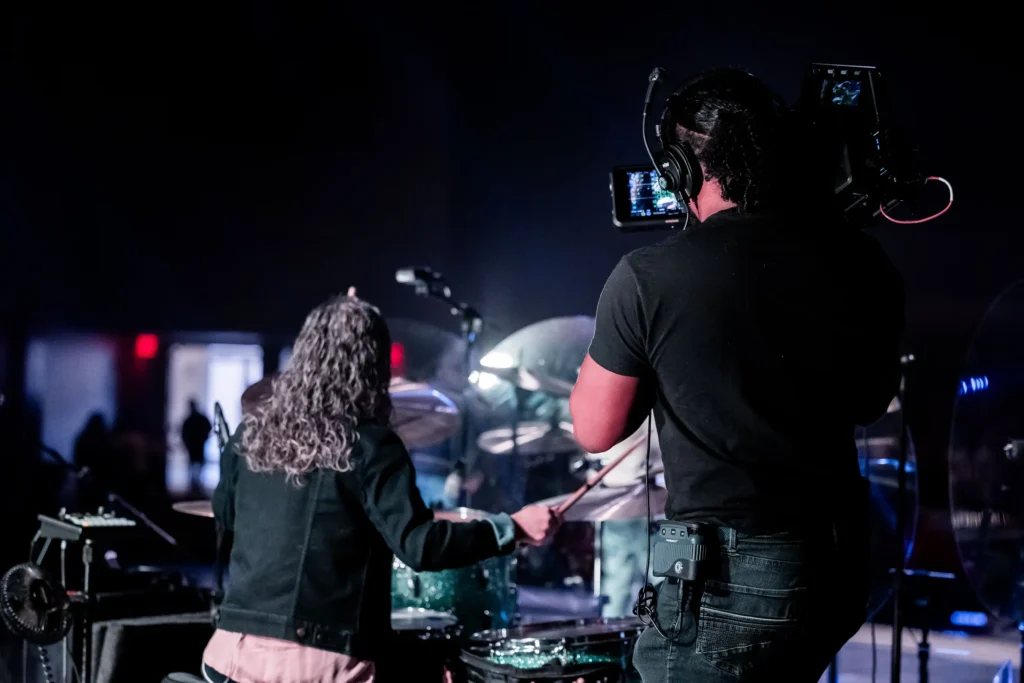
The director manages the creative performance and overall visual direction, while the cinematography team handles camera, lens, lighting and framing decisions.
What Happens on a Music Video Shoot?
The production stage may include:
- Camera setup
- Lighting setup
- Lens selection
- Framing decisions
- Playback of the master song
- Artist performance
- Multiple performance takes
- Narrative scenes
- Close-ups and wide shots
- B-roll
- Scene changes
- Continuity checks
The exact process depends on the creative concept and scale of the production.
Why Is Playback Used During Music Video Filming?
The recorded song is normally played during performance shots so the artist can perform in sync with the final track.
The resulting footage can then be aligned with the master audio during editing.
This is particularly important for performance-focused music videos where the artist’s lip movements or playing need to match the recorded track.
Why Are Multiple Takes Needed?
Multiple takes give the director and editor more material to work with.
The same performance may be captured from different camera angles or repeated to obtain stronger expressions, movements and compositions.
Additional takes can also provide alternatives when the editor is building the final sequence.
The number of shooting days depends on the project’s scale. Multiple locations, large casts, choreography, complex sets or specialised visual requirements can extend the schedule.
Stage 4: Music Video Post-Production
After filming is complete, the footage moves into post-production.
This is where the production team turns the raw footage into the finished music video.
Post-production can involve:
- Editing
- Colour correction
- Colour grading
- Visual effects
- Motion graphics
- Audio synchronisation
- Revisions
- Final delivery preparation
What Happens During Music Video Editing?
The editor first organises and reviews the footage before selecting the strongest takes.
The edit is then built around the structure of the song, including:
- Intro
- Verses
- Choruses
- Instrumental sections
- Transitions
- Key musical moments
The editing process may include:
- Footage organisation
- Rough cut
- Performance editing
- Fine cut
- B-roll integration
- Audio synchronisation
- Transitions
- Revision rounds
- Final picture lock
The first edit is not always the final version. The artist or client may review the cut and provide feedback before the edit is locked.
What Is Colour Correction?
Colour correction focuses on making footage consistent.
The colourist may correct differences in exposure, white balance, contrast or colour between shots so that the footage works together visually.
What Is Colour Grading?
Colour grading is the creative process of developing the final visual colour and tone.
After footage is corrected for consistency, grading can be used to create a specific visual mood or style.
Colour correction and colour grading are related but serve different purposes:
- Colour correction focuses on consistency.
- Colour grading focuses on the intended visual look.
Are Visual Effects Used in Music Videos?
Visual effects are added when the creative concept requires them.
Depending on the project, VFX can include:
- Motion graphics
- Title animations
- Screen replacements
- Digital clean-up
- Compositing
- 3D elements
- Other digital effects
Not every music video needs VFX. The scope should be decided during creative development and reflected in the production budget.
How Is the Music Synced With the Final Video?
Once the edit is close to completion, the video is checked against the approved master audio.
Performance footage, transitions and other visual elements should remain accurately aligned with the song throughout the final sequence.
This is especially important for performance and lip-sync sections.
Stage 5: Final Review and Delivery
The final stage is quality control and delivery.
Before publishing, the completed video should be reviewed for:
- Audio synchronisation
- Picture quality
- Colour consistency
- Visual errors
- Missing graphics
- Spelling or title errors
- Export problems
- Required revisions
After approval, the production team exports the final files according to the intended distribution platforms.
What Video Formats Might Be Needed?
The required deliverables depend on the distribution plan.
A project may need:
- High-resolution master
- Landscape version
- Vertical version
- Promotional clips
- Social-media cut-downs
- Platform-specific versions
The exact export specifications should be decided according to the platforms and campaign requirements rather than assumed at the end of production.
What Does a Client Need to Provide for a Music Video Project?
Having important information ready can make the production process easier.
Before approaching a production company, prepare:
- Final mastered audio track
- Basic creative idea
- Reference videos or moodboards
- Preferred release date
- Approximate budget
- Location preferences
- Wardrobe or styling requirements
- Brand guidelines, if applicable
You do not need to have every creative decision finalised before contacting a production team.
A director or producer can help develop the concept, identify practical requirements and shape the project around the available resources.
How Long Does Music Video Production Take?
There is no fixed timeline for every music video.
The production schedule can depend on:
- Creative complexity
- Number of locations
- Number of shooting days
- Casting requirements
- Choreography
- Set construction
- Equipment requirements
- Editing requirements
- VFX and motion graphics
- Number of revision rounds
- Client approval times
A smaller production may move from concept to delivery within several weeks, while a more complex project can take considerably longer.
The most reliable way to estimate a timeline is to build the schedule around the actual production requirements rather than using a fixed number of days for every project.
What Affects the Cost of Music Video Production?
There is no single price for music video production because every project has different creative and production requirements.
The main cost factors include:
Crew
A larger or more specialised crew can increase production costs.
Equipment
Camera systems, lenses, lighting equipment, gimbals and other specialised equipment can affect the budget.
Locations
Location rentals, permits, travel and set requirements can add to the production cost.
Cast and Talent
Actors, dancers, models and other performers may have different rates depending on the project.
Styling and Art Direction
Wardrobe, props, set design, makeup and other visual elements can contribute to the overall budget.
Post-Production
Editing, colour grading, motion graphics and visual effects require different levels of time and expertise.
Number of Shooting Days
Additional shooting days can increase crew, equipment, location, travel and production costs.
Defining the budget early allows the creative team to develop a concept that fits the available resources.
Why Work With a Music Video Production Company?
Producing a music video involves multiple creative and technical responsibilities.
A production company can coordinate these stages under one workflow, depending on the services it provides.
This may include:
- Creative development
- Production planning
- Cinematography
- Crew coordination
- Location management
- Filming
- Editing
- Colour correction and grading
- Visual effects
- Final delivery
The exact services vary between production companies. Before starting a project, confirm what is included in the scope and budget.
How Do You Choose the Right Music Video Production Partner?
Choosing a production partner involves more than looking at a camera reel.
Before starting a project, review the following:
Relevant Portfolio
Look for previous work that demonstrates the visual style, cinematography and production quality you want.
A portfolio can help you understand whether the company’s experience matches your project.
Clear Budgeting
Ask for a clear breakdown of the main production costs.
Confirm what is included, what may be charged separately and how additional production requirements will be handled.
Communication
Make sure the team understands your:
- Creative direction
- Music
- Timeline
- Budget
- Deliverables
- Expectations
Clear communication before filming can reduce avoidable changes later.
Production Capability
Check whether the company can manage the stages you actually need, from concept development and pre-production to filming and post-production.
Post-Production Services
If you need colour grading, VFX, motion graphics or multiple social-media versions, confirm whether these services are available and included in the project scope.
Music Video Production With 20Hz PRODUCTIONS
At 20Hz PRODUCTIONS, music and visual storytelling come together through an end-to-end production workflow.
20Hz PRODUCTIONS works with brands, artists and businesses, handling projects from ideation to delivery. Its music video service covers concept, direction, filming, editing, VFX and colour grading. Additional options include styling, dancers, choreography, casting and BTS reels.
The music video offering includes:
- Original music videos
- Cover music videos
- Instrumental music videos
20Hz PRODUCTIONS also provides creative content for social media, including reels, artist promotions, backstage edits, teaser cuts, interviews and cinematic B-rolls.
For projects requiring multiple production stages, 20Hz PRODUCTIONS provides end-to-end project management covering pre-production requirements such as storyboarding, budgeting, locations and casting through post-production and distribution formats.
The brand’s positioning brings its music and visual capabilities together under one production workflow, combining musicians and visual storytellers.
Explore 20Hz PRODUCTIONS for music video production and related visual production services.
Frequently Asked Questions
The music video production process is the workflow used to turn a recorded song into a finished visual project. It generally includes concept development, pre-production, filming, post-production and final delivery.
The timeline depends on the project's complexity, locations, number of shooting days, editing requirements, revisions and VFX. Smaller productions may take several weeks, while more complex projects can require longer.
Pre-production involves developing the concept and planning the shoot. It can include storyboarding, shot lists, location scouting, casting, styling, crew coordination, scheduling, budgeting and permits.
Production is the filming stage. The team captures performances, narrative scenes, B-roll and other planned footage using the approved shot list and production schedule.
Post-production includes organising and editing the footage, synchronising it with the master audio, colour correction, colour grading, motion graphics or VFX where required, revisions and final exports.
There is no single fixed price. Costs depend on factors such as crew size, equipment, locations, cast, shooting days, styling, post-production and visual effects.
A music video production company can coordinate the creative and technical stages of a project, from concept development and pre-production to filming, editing, colour grading and final delivery.
Start with your final mastered song, creative references, preferred release date and approximate budget. Any location, styling or brand requirements you already know can also help the production team plan the project.
Not every music video requires a detailed storyboard, but storyboards can help communicate important scenes, camera positions, framing and movement. The level of planning should match the complexity of the production.
Yes. If social-media promotion is part of the release plan, vertical versions and shorter promotional edits can be planned during production rather than created as an afterthought.

CATEGORIES
Start Your Project
Bring your music video, brand film, or content project to life with 20Hz PRODUCTIONS. Our team handles everything from concept to final delivery.
2 Responses