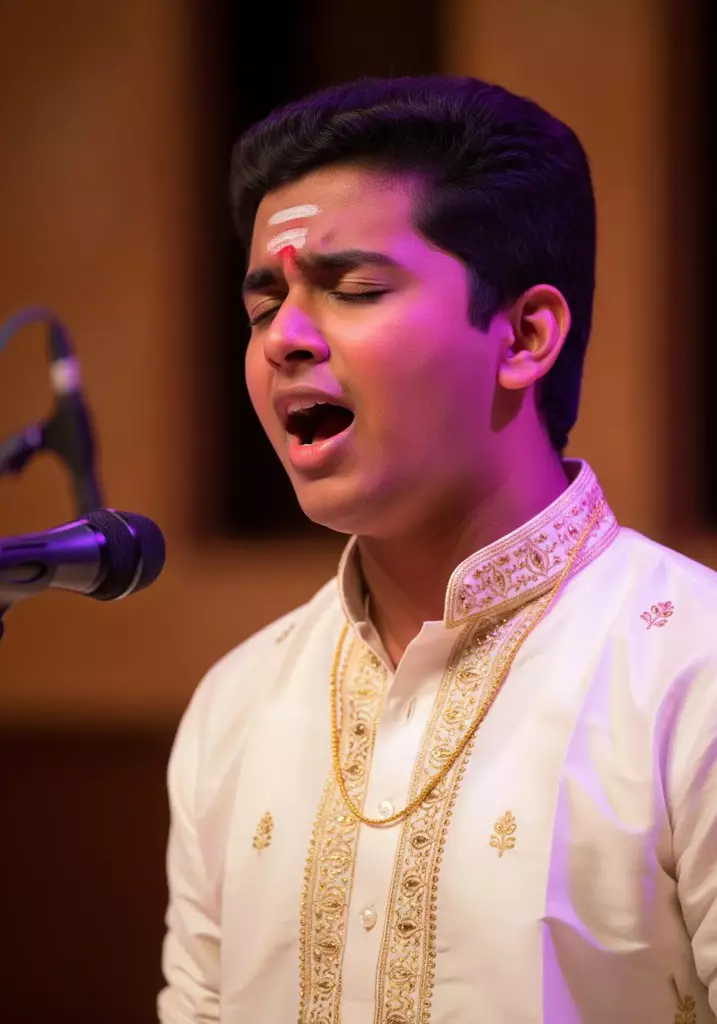
How to Learn Carnatic Vocal: A Beginner’s Step-by-Step Guide
You can learn Carnatic vocal as a beginner by starting with listening, basic swaras, shruti-based pitch training, and a consistent daily practice routine — no prior musical experience is required.
Terms such as shruti, swara, tala, raga, and Sarali Varisai can feel unfamiliar at first, but each plays a specific role in building a strong vocal foundation. With a comfortable pitch reference and regular practice, beginners can gradually develop pitch awareness, rhythm, and vocal control.
This guide explains how to learn Carnatic vocal as a beginner, what to practise first, how to build a simple routine, and when structured guidance can help.
Yes. Anyone with an interest in music and a willingness to practise can begin learning Carnatic vocal.
You do not need to start with advanced compositions or complicated music theory. Beginners can first work on listening, pitch matching, basic swaras, foundational exercises, rhythm, and simple melodies.
The key is to progress gradually instead of trying to learn everything at once.
A simple beginner learning path is:
Listening → Shruti and Pitch → Basic Swaras → Foundational Exercises → Tala and Rhythm → Simple Melodies → Regular Practice
Starting with these fundamentals helps you build control before moving into more advanced compositions and [Understanding Ragas in Carnatic Music] raga-based learning.
Before you begin singing, spend time listening to Carnatic music.
Active listening helps you become familiar with pitch movement, note patterns, rhythm, phrasing, and the way a vocalist moves between notes.
Try these simple exercises:
Focus on matching the pitch rather than trying to copy the singer’s speed or vocal style.
Listening regularly can help you develop a stronger musical ear before you begin working on more demanding exercises.
The seven basic swaras are:
These swaras form an important foundation for learning Carnatic music.
Do not simply memorise their names. Practise singing them clearly and gradually develop the ability to recognise and reproduce their pitch.
For a beginner, shruti can be understood as the pitch reference or tonal centre used to keep the voice aligned while singing.
Matching your voice to a comfortable shruti is an important part of developing pitch accuracy. Consistent pitch-reference practice is one of the most reliable ways beginners build accurate intonation, according to [established vocal training resources].
To practise:
Do not force your voice into a pitch that feels uncomfortable. A suitable reference pitch should allow you to sing naturally without strain.
[Sarali Varisai Exercises for Beginners] consist of foundational graded exercises used in beginner Carnatic music training. These exercises help learners work on swara accuracy, pitch, rhythm, coordination, and familiarity with note patterns.
The first exercise can involve a simple ascending and descending movement:
However, Sarali Varisai is not limited to this simple scale pattern. The exercises progress through different swara combinations and are practised systematically.
As a beginner:
A teacher can also correct pitch, rhythm, pronunciation, and technique as you progress.
Tala provides the rhythmic framework of Carnatic music.
As a beginner, you do not need to start with complex rhythmic concepts. Begin by developing a steady sense of timing.
Try:
The goal is to make rhythm feel natural rather than treating it as something separate from singing.
Once basic swara exercises become more comfortable, you can gradually begin learning simple Carnatic compositions.
Beginner training commonly introduces forms such as Geethams before progressing towards more complex repertoire.
When learning a simple melody:
Do not increase the speed before you can sing the notes accurately. Focus on accuracy and musical expression before trying to perform the piece quickly.
Regular practice is generally more useful than occasional, lengthy sessions.
For a beginner, even a focused 20-minute routine can provide a practical starting point.
You can adjust this routine according to your level and schedule. Consistency matters more than forcing yourself to practise for long periods.
Yes. You can begin learning Carnatic vocal at home by practising basic swaras, pitch matching, listening exercises, and foundational vocal exercises.
A Tanpura or shruti app can provide a continuous pitch reference during practice.
However, self-study has limitations. It can be difficult to:
Self-study can therefore be useful for getting started, while structured guidance can provide feedback and a clearer progression.
Jumping directly into complex compositions can make learning unnecessarily difficult. Start with foundational exercises and simple melodies before moving to more demanding repertoire.
Practising without a consistent pitch reference can make it harder to develop pitch awareness. Use a Tanpura or suitable shruti reference during practice.
Basic exercises are designed to build familiarity with swaras, pitch, rhythm, and coordination. Do not rush through them simply because they appear simple.
Pitch is only one part of the learning process. Practise keeping the tala while singing your exercises.
Long sessions once in a while are not necessarily more useful than shorter, consistent sessions. Build a realistic routine that you can maintain.
Listen to experienced singers for learning and inspiration, but do not force your natural voice to sound exactly like someone else’s.
Singing should not cause pain or persistent discomfort. If your voice feels strained, stop and rest rather than pushing through it.
Developing pitch, rhythm, vocal control, and musical confidence takes time. Focus on steady progress instead of expecting advanced results immediately.
There is no single timeline that applies to every beginner.
Progress can depend on:
Instead of setting a fixed deadline, focus first on developing a strong foundation in swaras, shruti, rhythm, and basic exercises. As your foundation becomes stronger, you can gradually move towards more complex compositions and deeper study of ragas.
Structured learning can be useful when you want regular feedback and a clear progression from one stage to the next.
A guided learning environment can help you:
20Hz Academy’s Carnatic Vocal programme covers voice culture, breath control, pitch development, and repertoire like Geethams and Varnams. Classes are personalised and small batch, with flexible scheduling and stage-readiness training.
Yes. Beginners can start learning Carnatic vocal without previous formal music training. A structured foundation in pitch, swaras, rhythm, and regular practice can help you progress gradually.
Yes. You can begin with listening, basic swaras, pitch matching, and foundational exercises. A teacher can provide feedback and help you follow a structured progression.
Start with listening, a comfortable shruti, the basic swaras, pitch matching, and foundational exercises such as Sarali Varisai.
Sa, Ri, Ga, Ma, Pa, Da, and Ni are the seven basic swaras, the foundational notes used in Carnatic music.
For beginners, shruti can be understood as the pitch reference or tonal centre used to keep the voice aligned while singing.
Tala is the rhythmic framework that organises the timing and cycle of beats in Indian classical music.
Practise regularly with a consistent Tanpura or shruti reference. Start with steady notes and basic swara exercises before increasing speed or complexity.
A short, focused daily practice session can be a practical starting point. The most important factor is consistency.
Yes, in most cases. A teacher can give feedback on pitch, rhythm, and technique that is difficult to assess accurately through self-study alone.
Start your music journey with 20Hz Academy. Get personalized training in vocals, instruments, and music production. Available online and in Kochi.